Multitasking appears to be a symbol of honour in our fast-paced world since it allows us to accomplish more in less time. However, have you ever given it any thought as to what exactly happens to your brain when you are multitasking?
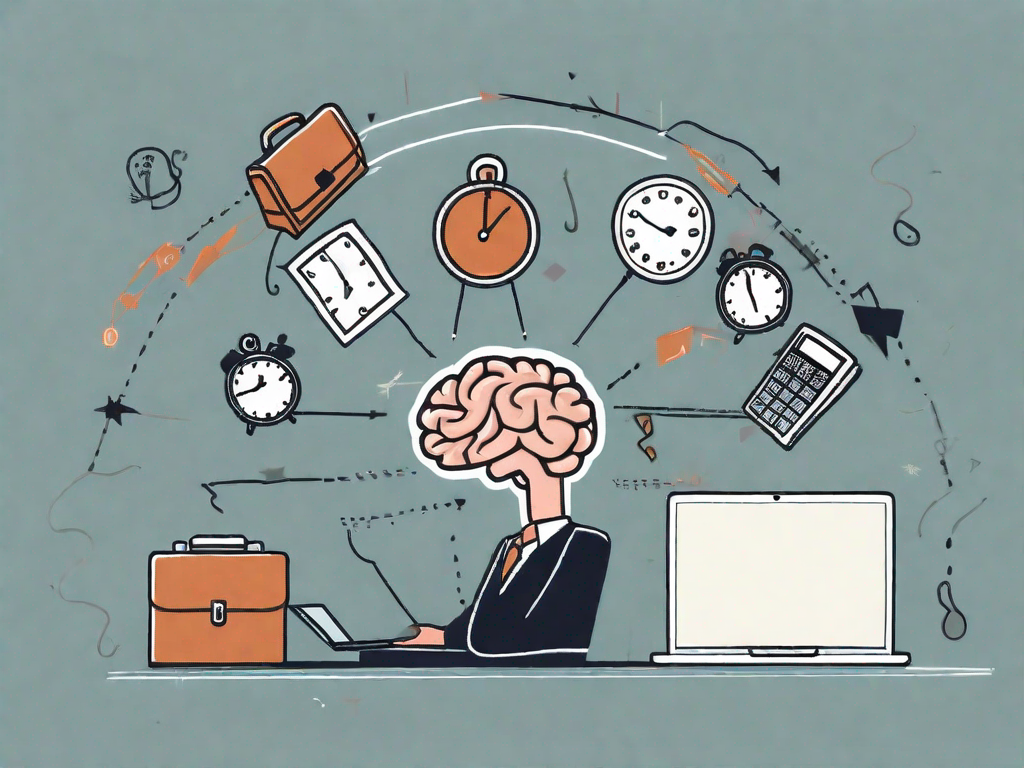
Imagine attempting to balance a ball on a bicycle. Sounds hard, right? Your brain goes through that when you attempt to manage several activities at once. Rather than improving productivity, multitasking can result in mistakes, anxiety, and decreased efficiency. According to research, our brains aren't built to manage multiple activities at once. Due to the frequent task switching that depletes our mental energy, multitasking typically consumes time rather than reduces it.
Let's look at it with a simple experiment. Consider reading a book and having discussions at the same time. See how difficult it is to give either of them your whole attention? This is a result of your brain's ineffective attention-splitting mechanism. Your brain must constantly refocus as you move from one task to another, which consumes time and energy.
Task-switching is a phenomenon that interferes with your cognitive flow and decreases your efficiency rather than increases it. It can sometimes take up to 25 minutes after an interruption to regain complete focus, according to studies. This implies that you are wasting valuable time every time you switch tasks.

There can be substantial psychological effects from multitasking. Ever after a day of constantly checking emails, making calls, and attending meetings, did you feel stressed out? Your brain is trying to notify you that it is overloaded by doing that. Prolonged multitasking can cause the production of stress hormones such as cortisol, which over time can cause chronic tension and anxiety. In addition, it makes it harder for you to remember things and concentrate on what really matters.
Burnout, a condition of persistent stress-related emotional, bodily, and mental weariness, can also result from this continuous state of high alertness. Just consider the toll this takes on your general health and level of output.
Think about the situation at work. Although you might believe that responding to emails during a meeting makes you a standout worker, you're probably losing out on important details that were discussed. Organizations that promote deep work, in which staff members concentrate on a single task without distractions, frequently witness increases in output and higher-quality work.
Deep work is spending extended, concentrated amounts of time on difficult tasks requiring a lot of mental energy. For students, multitasking during class results in decreased comprehension and worse grades. Imagine messaging a friend while attempting to figure out a challenging maths issue. It is almost hard to give each task the same time and attention it requires.

What then is the solution?
Welcome to one-tasking. Set apart specific periods of time to concentrate on tasks, check emails, and attend meetings. Disconnect all external stimuli by disabling notifications and establishing clear boundaries. You may stay focused by using strategies like time blocking, which involves setting aside particular times for each work, and mindfulness, which enhances attention and concentration. You'll not only feel less stressed but also more productive and happier if you focus entirely on one task at a time. Recall that the focus should be on mastering one task rather than juggling multiple tasks at once. High levels of focus can be maintained and burnout can be avoided with the use of techniques like the Pomodoro Technique, which entails working for 25-minute intervals interspersed with brief breaks. Using noise-canceling headphones to create a distraction-free atmosphere will help you focus even more. Adopting single-tasking, which involves setting up designated periods of time for various tasks and removing pointless distractions, promotes higher-quality work and results in a more balanced and stress-free existence. Using these techniques can result in a less stressful, more productive, and ultimately more fulfilling way of living and working.
By embracing single-tasking and these practical strategies, you'll not only boost your productivity but also reclaim your peace of mind – so why not give it a try and see the difference it makes?
Comments